


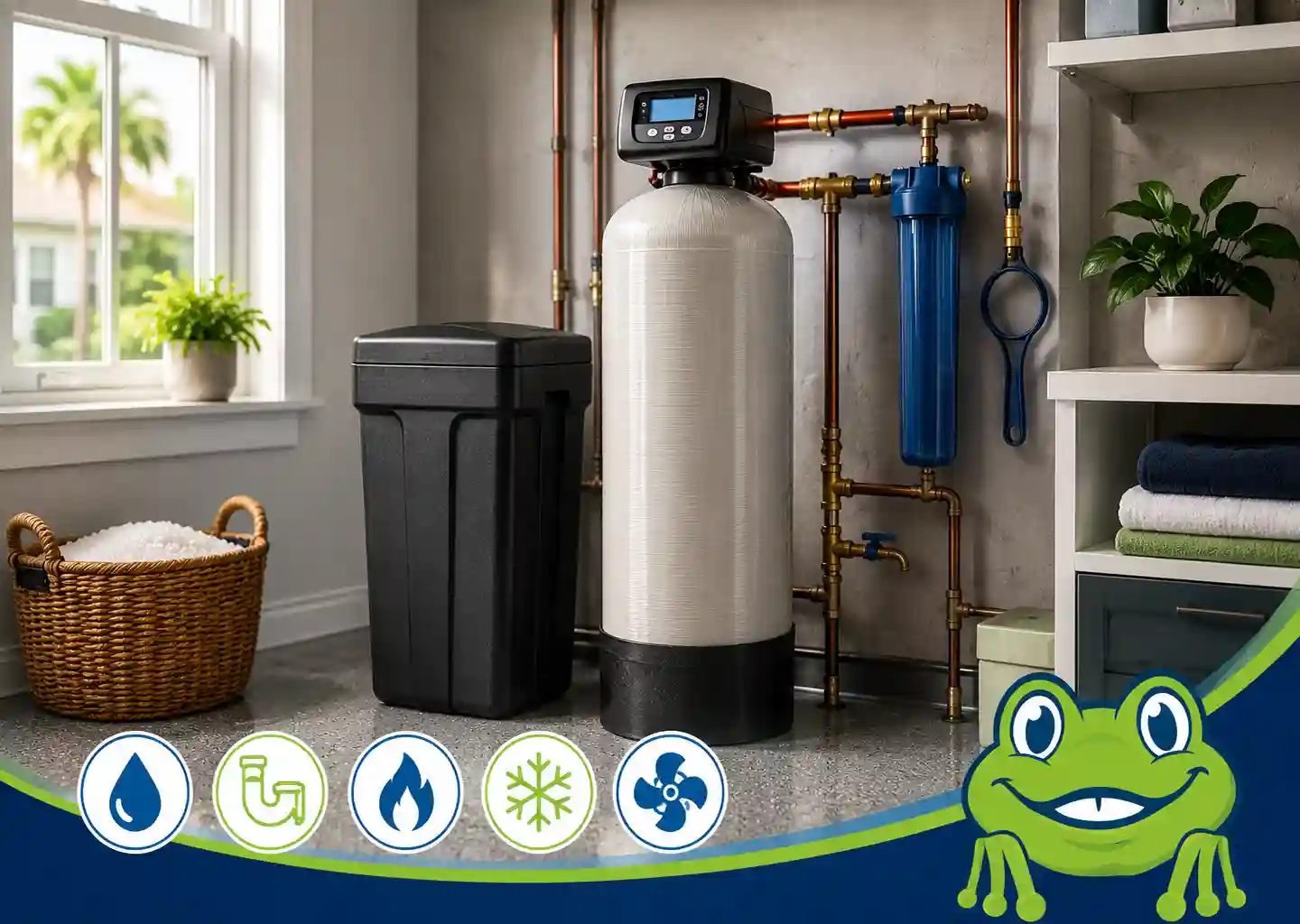
If you live in Florida, you've likely noticed white, crusty buildup on your faucets, stiff laundry, or dry skin after a shower. That is hard water, and in many parts of the Sunshine State, it is a significant issue. As your trusted local plumbing experts, we're breaking down everything you need to know about water softeners to protect your home's plumbing investment.
What is a Water Softener & Why Do You Need One?
A water softener is an appliance that removes calcium, magnesium, and iron from your water supply through a process called ion exchange.
- check_circleProlonged Appliance Life: Prevents scale buildup, extending the life of dishwashers, washing machines, and water heaters.
- check_circleBetter Skin and Hair: Soft water lathers better, leaving hair and skin feeling cleaner and softer.
- check_circleCleaner Dishes & Laundry: No more stubborn hard water stains or stiff, dingy laundry.
Types of Water Softeners for Florida Homes
Not all softeners are the same. In Florida, where water usage can be high, choosing the right type is crucial.
Salt-Based Ion Exchange Softeners (Most Common)
These use resin beads to trap hard minerals and release sodium ions.
Dual-Tank/Twin-Alternating Softeners
Ideal for large Florida families or high-hardness areas. One tank regenerates while the other works, ensuring 24/7 soft water.
Hybrid Systems
These combine softening with an activated carbon filter to remove chlorine taste/odor from city water.
Salt-Free Conditioners
Note that these do not technically remove minerals; they change their structure to prevent scale but don't offer the "soft" feel.
Understanding Media Types & Life Expectancy
The "media" (resin beads) is the heart of the softener.
Standard Resin
Lasts 5–8 years, but can degrade faster if your water has high chlorine levels.
Iron-Reduction Resin
Necessary for Florida well-water, which is high in iron. This media prevents the resin from becoming iron-fouled.
Lifespan Factors
Single-Tank Units: Typically last 4–7 years depending on water supply and usage.
Dual-Tank Units: Often last 8–10 years because of shared workload.
Water Source: Well water requires more frequent regeneration and tougher resin compared to city water.
What to Look For (Florida Specifics)
1. High-Capacity Resin
Look for systems designed to handle high GPG (grains per gallon) levels typical of Florida.
2. Iron Removal Capability
If you have well water, a basic unit won't cut it. Ensure it can handle iron levels.
3. Efficiency Ratings
Look for demand-initiated regeneration, which only cleans when necessary, saving water and salt.
4. Size Matters
The system must be sized based on your family's water usage and hardness level.
What to Know Before Buying
Initial Cost vs. Long-Term Savings
While an investment, a softener saves money by reducing appliance repairs and soap usage.
Maintenance
Salt-based systems require regular salt refills.
Professional Installation
A professional plumber will test your water first and ensure the system is installed correctly to meet local plumbing codes.
Need Help Choosing?
Don't let hard water destroy your plumbing. Contact Lakeside Heating, Cooling & Plumbing today for a water test and consultation to find the perfect system for your Florida home.